
Despite sustained global efforts through the Global Polio Eradication Initiative launched by the World Health Assembly in 1988, polio continues to persist and re-emerge in several countries. Globally, fewer than 2,000 polio cases were reported in 2020.1 While Afghanistan and Pakistan remain the only countries with endemic wild poliovirus, the Democratic Republic of Congo (DRC) is among 47 countries experiencing recurrent outbreaks of circulating vaccine-derived poliovirus (cVDPV).2 According to the World Health Organization, the DRC accounts for nearly half of all cVDPV type 2 cases detected in the WHO African region.3 In 2022 alone, approximately 290 cVDPV2 and 86 cVDPV1 cases were reported, raising concern about persistent transmission and possible vaccine failure.4
Polio vaccine failure (PVF) is increasingly recognised as a possible contributor to ongoing polio circulation in the DRC. PVF may result from a combination of biological and social determinants. Nutritional deficiencies—including low iron, ferritin, vitamin B12 and vitamin D—can impair immune function by weakening both innate and adaptive responses. These deficiencies often co-occur with hematological abnormalities such as anaemia, microcytosis, leukopenia and neutropenia, all of which may reduce the body’s ability to mount adequate seroconversion following vaccination5–7 Previous evidence has also demonstrated the link between undernutrition and PVF. Mwamba et al., for instance, reported that wasting was strongly associated with seronegativity post-vaccination.8 Nationally, wasting remains a major burden in the DRC, affecting approximately 7% of children under five according to the 2023 Demographic and Health Survey.9
While most existing research on polio in the DRC has focused on vaccine coverage, outbreak surveillance and programmatic challenges,10–12 limited attention has been given to hematological contributors to PVF. We hypothesised that hematological factors play a significant role in PVF among vaccinated children in Maniema and Ituri provinces. This study therefore aimed to estimate the prevalence of PVF and identify associated determinants, with an emphasis on hematological markers. The findings may inform targeted public health interventions to improve vaccine effectiveness in these high-burden settings.
METHODS
Study area, design, and period
A cross-sectional study was conducted between February and April 2024 in the Maniema and Ituri provinces of the Democratic Republic of Congo (DRC). Both provinces are among the 26 administrative provinces of the country and are characterised by recurrent conflict, political instability, and constrained health service delivery. The World Health Organization reports repeated polio outbreaks in these provinces.3
Study population and eligibility criteria
The study included children aged 1–10 years who were documented as fully vaccinated against polio, verified through the presentation of a vaccination card. Eligible participants must have resided in either province for at least six months. Interviews were conducted with mothers or primary guardians. Children were excluded if their mother/guardian was unavailable or unable to communicate with data collectors at the time of survey.
Sample size determination
Sample size was calculated using the formula for cross-sectional studies based on a 95% confidence level (Z = 1.96), an assumed prevalence of polio vaccine failure of 50% (due to the absence of prior estimates), a 5% margin of error, and a design effect of 1.2 to account for clustering. An additional 10% was added to compensate for potential non-response, resulting in a minimum required sample size of 460 participants.
Sampling procedure
A three-stage cluster sampling design was applied.
Stage 1: Four health zones (HZs) were randomly selected per province. Maniema contributed Brazza, RVA, Lumbulumbu, and Kindia; Ituri contributed Bora Uzima, BIGO, NGEZI, and Lembao. Selection considered prior VDPV notifications and satisfactory oral polio vaccine 3 (OPV3) and inactivated polio vaccine (IPV) coverage indicators.
Stage 2: Two health areas (HAs) were randomly selected from each HZ.
Stage 3: Health facilities within selected HAs were randomly sampled, and blood samples alongside interviews were conducted among all eligible children encountered at facilities and within surrounding households.
Data collection and instruments
Data were collected using a structured tool capturing sociodemographic, anthropometric, and biological characteristics. Sociodemographic data included age, sex, province, health zone, and health area. Anthropometric measurements (weight and height) were obtained following WHO standard guidelines. Hematological parameters were analysed on-site using the Mindray BC-51150 haematology analyser (Wuhan, China).
Operational definitions
-
Polio vaccine failure (PVF): inadequate serological immunity despite full vaccination, defined as antibody titres < 8 International Units.
-
Global Acute Malnutrition (GAM): weight-for-height Z-score < −2 for children aged 1–4 years, and BMI-for-age Z-score < −2 for those aged 5–10 years.
-
Haematological classifications:
-
Anaemia: Hb < 11 g/dL; High Hb: > 16 g/dL
-
Microcytosis: MCV < 75 fL
-
Thrombopenia: < 150,000/µL; Thrombocytosis: > 450,000/µL
-
Leukopenia: < 4,500/µL; Leukocytosis: > 13,500/µL
-
Neutropenia: < 1,700/µL; Neutrophilia: > 7,500/µL
-
Lymphopenia: < 1,500/µL; Lymphocytosis: > 7,000/µL
-
Monopenia: < 200/µL; Monocytosis: > 900/µL
-
Eosinopenia: < 50/µL; Eosinophilia: > 500/µL
-
Basophilia: > 100/µL
-
Data processing and analysis
Data were exported from the server to Stata version 18 for analysis. Child nutrition indices were computed using WHO Anthro and WHO AnthroPlus software. All records were anonymised and server access restricted to authorised investigators. Survey commands (svy) were applied to account for sampling weights and clustering.
Categorical variables were summarised using frequencies and percentages. Chi-square or Fisher’s exact tests (for cell counts < 5) assessed associations with PVF. To identify factors associated with PVF, modified Poisson regression with robust standard errors was used due to the high prevalence of the outcome, allowing direct estimation of prevalence ratios (PRs). Underlying regression assumptions were verified prior to model interpretation.
Ethics Approval
Ethical approval for this study was obtained from the National Ethics Committee of the Democratic Republic of Congo. Written informed consent was obtained from mothers or legal guardians of all participating children.
RESULTS
Sociodemographic characteristics of children and their mothers
A total of 408 children was included in our study, with a response rate of 89% (408/460). Overall, 54% (221) of the participants were less than 5 years old, with 59% (131) residing in Ituri. More than half of children, 52% (211) were female, while 10% (38%) were wasted (Table 1).
Distribution of hematological parameters among children living in ituri and Maniema
Of the children, 46% (187) had anemia, 40% (163) had microcytosis, 73% (299) had hypochromia, 14% (56) had thrombopenia, 61% (250) had leucopenia, 84% (341) had neutropenia, and 33% (134) had lymphocytosis (Table 2).
Polio vaccine failure among children by provinces (Ituri versus Maniema)
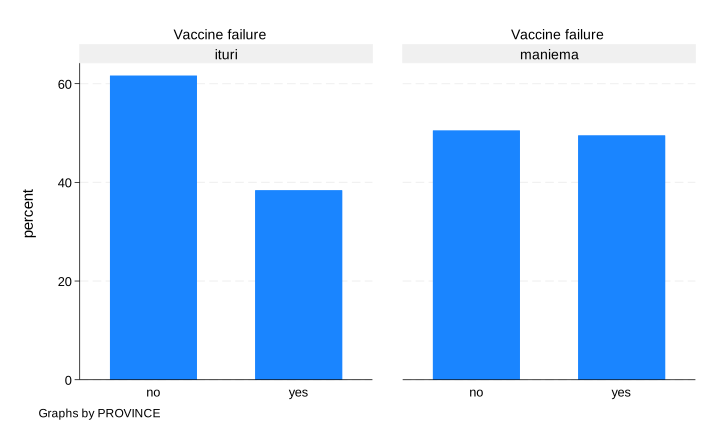
More than half of children in Ituri had a polio vaccine failure (62%), while half of children in Maniema had a polio vaccine failure (50%) (Figure 1).
Factors associated with polio vaccine failure among children in Ituri and Maniema
Children with a normal platelet count and those with thrombocytosis had lower vaccine failure than those with thrombopenia (adjusted PR = 0.66, 95% CI [0.50; 0.87]) and (adjusted PR = 0.42, 95% CI [0.26; 0.66]), respectively. Children with lymphocytosis had higher vaccine failure than those with lymphopenia (adjusted PR = 1.85, 95% CI [1.09; 3.15]) (Table 3).
DISCUSSION
This study aimed to determine the prevalence of PVF and its associated factors in Maniema and Ituri provinces. The observed high proportions of PVF raise major concerns regarding the effectiveness of current polio vaccination activities in these settings. Such findings suggest that although administrative coverage reports may indicate satisfactory vaccination uptake, actual population-level immunity remains inadequate. Similar discrepancies between reported coverage and serological protection have been documented elsewhere.5,11,12 This indicates that increasing the number of vaccine doses alone may not be sufficient to interrupt transmission. Instead, vaccination programmes may benefit from regular immunogenicity assessments and quality audits to ensure that recorded coverage translates into effective seroconversion. These findings underscore the need to shift from input-based performance indicators toward immunity-based evaluation metrics in polio eradication efforts.
Unexpectedly, children whose mothers had only primary education showed a higher likelihood of PVF compared to those whose mothers had no formal education. This counterintuitive pattern may reflect residual confounding or misclassification within education categories. It is also possible that caregivers with minimal education may have misconceptions about vaccine schedules or storage practices at home. Further research is necessary to better understand the mechanisms behind this association. Nonetheless, vaccination education and communication strategies should continue to target mothers at all educational levels to ensure optimal adherence and understanding.
Children with normal and elevated platelet counts demonstrated lower risk of PVF compared to those with thrombopenia. Platelets play a growingly recognised role in immune regulation, serving as mediators of inflammation, cytokine amplification, and host defence.13–15 Subclinical inflammatory states may preserve platelet levels while impairing mucosal immune responses to oral vaccines. This suggests that immune-haematologic conditions may influence OPV immunogenicity in environments with high viral exposure. These findings align with emerging evidence linking biological and environmental inflammatory burdens to heterogeneous mucosal vaccine responses in low-resource settings. Further mechanistic studies are needed to clarify the immunological pathways involved.
Similarly, children with monocytosis had greater odds of PVF relative to those with monopenia. Monocytosis typically signals ongoing immune activation resulting from persistent infection or environmental exposures. Evidence from previous studies shows that enteric pathogen exposure, environmental enteropathy, and chronic inflammation can compromise oral vaccine performance, including OPV.15,16 Monocytosis may therefore reflect underlying chronic inflammatory conditions that interfere with OPV replication in the gut, hampering neutralising antibody production. This supports the notion that chronic inflammatory burden plays a critical role in oral vaccine immunogenicity and highlights the potential utility of developing biomarkers to identify children at risk of suboptimal vaccine response.
Furthermore, lymphocytosis was associated with an increased likelihood of PVF. Given that lymphocytes are central to antigen recognition, antibody generation, and immunological memory, dysregulation in lymphocyte profiles may impede effective vaccine response. Previous research has shown that immune suppression, malnutrition, or infection-induced lymphocyte dysfunction can reduce the efficacy of live attenuated vaccines.17 Improving children’s nutritional and immune status, alongside targeted interventions to reduce immune suppression, could therefore enhance OPV effectiveness in high-risk settings.
Strengths and Limitations
This study adds new evidence on the contribution of haematological abnormalities to PVF, an area that has received limited attention in the DRC and similar contexts. The use of laboratory-confirmed serological outcomes strengthens the reliability of findings.
However, some limitations must be acknowledged. First, the cross-sectional design limits causal inference between identified factors and PVF. Second, the 11% non-response rate may have introduced selection bias and affected statistical power. Third, potential residual confounding, vaccination card misclassification, and reverse causality cannot be excluded. Finally, laboratory measurements could have been influenced by sample handling conditions, although standard procedures were followed.
Conclusion
This study demonstrates a high prevalence of PVF in Maniema and Ituri despite reported full vaccination coverage, with several haematological markers significantly associated with vaccine failure. Integrating routine haematological assessments into vaccination programmes and addressing underlying nutritional and micronutrient deficiencies may strengthen immune response to OPV. Future research should incorporate longitudinal designs to assess temporal relationships, investigate immunologic mechanisms, and account for potential measurement and classification errors.
Ethics Approval
Ethical approval for this study was obtained from the National Ethics Committee of the Democratic Republic of Congo. Written informed consent was obtained from mothers or legal guardians of all participating children.
Data Availability Statement
The datasets generated and analysed during this study are available from the corresponding author upon reasonable request.
Funding
This research received partial financial support from the World Health Organization Country Office in the DRC, which funded approximately 20% of the total study cost. The remaining resources were covered by the authors. The funders had no role in study design, data collection, analysis, interpretation, or manuscript preparation.
Author Contributions
Conceptualization: BK, BLM, SA, MN
Data curation: ASM, AK, TK, CK, RA
Formal analysis: LMG, AS, GLM, MM
Investigation: BK, AB, MN, BLM, MM
Methodology: MN, AS, AK, TK, CK, SA, ABM
Supervision: MN, BLM
Writing – original draft: MN, MM, AS, AK, TK, CK, SA, AB
All authors reviewed and approved the final manuscript.
Competing Interests
The authors declare no competing interests.